
Every plant has a safety video that nobody watches. It plays in the break room during onboarding, new hires nod along, and the forklift on screen isn’t the forklift in the warehouse. The guard on the stock-footage press looks nothing like the one on line three. Workers notice almost immediately, and from then on they stop listening.
That’s the core problem with generic compliance video: it asks people to trust it while showing them a workplace that isn’t theirs.
Choosing a safety video production company is really choosing whether your training shows your equipment, your PPE, and your people doing the job the way your procedures say to. It’s also choosing a crew that can walk onto an active site without becoming the hazard. Those two requirements rule out more vendors than the budget does.
Most of that gets decided in planning, long before anyone brings a camera through the gate.
Why Your Own Floor Beats Stock Footage:
When a video shows the actual lockout points on your actual machine, the worker can repeat it at that machine. That transfer is the point of training, and stock footage breaks it. Use your own employees on camera. A respected line lead demonstrating a procedure carries more weight than an actor, and coworkers notice when a step is skipped. Hospitals run into the same problem: health care video production for staff safety works best when it shows the facility’s own lift equipment and sharps containers, not someone else’s.
Your Site, Your Rules:
Schedule the shoot around planned maintenance: the equipment gets locked out anyway, and the line isn’t losing production.
What the crew needs before it walks in
- Site orientation and PPE fitted for each filming area
- Mine hazard training. MSHA requires site-specific hazard awareness training for visitors at many surface mines
- Whatever your contractors carry, such as OSHA 10 cards
Hazards that change the shot list
- Lockout/tagout: your authorized employees perform the procedure on camera. The crew never touches an energy source.
- Confined spaces: a camera operator doesn’t enter a permit-required space unless your permit program covers them. Most shots work from the opening or a remote camera.
- Hot work and classified areas: the crew stays outside a hot work area unless the permit covers them. Where flammable gas or dust is present, ordinary lights and batteries can be ignition sources, so your safety team approves the gear list.
All of that belongs in pre-production, alongside the shot list, with an escort assigned in advance. Most instructional video production companies can shoot a clean procedure demo. Planning one around a hot work permit is a different skill. If you’re comparing Austin video production companies for a Central Texas plant or quarry, ask each one which sites they’ve filmed and under what rules.
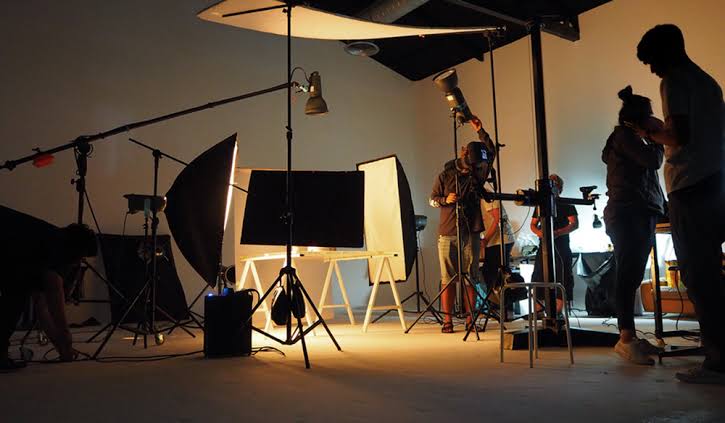
Shoot Once for Every Language and Every New Hire:
OSHA’s training policy is explicit: required training must be delivered in a language and vocabulary employees understand. Get the real language list from HR rather than assuming English and Spanish, and have translations checked by someone who knows your floor; the dictionary word for a tool often isn’t your crew’s word.
New hires start any day, so every module must stand alone without a trainer. Then design for every language:
- Narration in voice-over, not on-camera dialogue needing lip-sync
- Leave room in the edit; translated narration often runs longer than English
- Editable on-screen text and a textless master
- Separate voice, music, and effects tracks, so a new language is a swap
Short Modules Make the Annual Sit-Down Stick:
Keep the 30-minute annual session as the anchor, but stop asking it to carry everything. Cut two- or three-minute modules from the same footage: one hazard, one procedure, watchable on a phone at shift start.
Design those modules for a loud floor. Assume nobody hears the narration; every step must be read in captions and on-screen text. Better still, where site rules allow phones, put a QR code beside the lockout points, so the video is one scan away.
Tie Every Module to Its Procedure:
OSHA’s updated Hazard Communication Standard requires employers to train on newly identified hazards in chemical substances by November 20, 2026, after a four-month extension. A modular library makes that an edit, not a reshoot. Label each module with the document number and revision of the procedure it shows. When an auditor asks which video matches which SOP, the file name answers.
Frequently Asked Questions:
Q1. Should we use employees or actors?
Employees, if they perform the task correctly. Get a signed release that covers use after they leave the company.
Q2. Can one shot produce several languages?
Yes, if voice-over, graphics, and audio can swap.
Q3. How often should safety videos be updated?
Whenever a procedure, machine, or regulation changes. A yearly review catches the rest.
Final Thoughts:
Workers trust training that looks like their job. Whether your crew comes from a video production Austin TX search or from down the road, ask what they’re trained for before they reach your floor, and how they’ll keep the video accurate after they leave.