
Attention spans are short, but the demand for useful, clear learning content has never been higher. Whether you lead L&D in a fast-moving Austin tech team or oversee curriculum for a college program, your learners will bail the moment a video feels confusing or slow.
The good news: the same craft that powers great documentaries—structure, pacing, and visuals with purpose—can turn your training into content people finish and remember. As a professional video production company, Elephant Productions focuses on building classroom-ready and workplace-ready content that does both. This guide shares seven practical secrets you can use right away, plus a quick tour of services that make educational video production succeed at scale.
Why educational video works in 2025:
Video has become the default way people learn at work and school. In 2025, 89% of businesses use video, 93% of marketers report good ROI, and 99% say video improves user understanding—numbers that explain why budgets continue to hold or grow.
Inside organizations, short, targeted lessons are the new normal: LinkedIn’s Workplace Learning Report notes that daily work increasingly includes microlearning—bite-sized instruction in the flow of work—and that L&D teams are actively prioritizing it.
The research backs the approach. Recent peer-reviewed studies and reviews find microlearning positively impacts learning outcomes across settings, including healthcare education and higher education.
What Elephant Productions brings to the table:
A strong result starts long before the camera rolls. Elephant Productions’ core services fit the full learning lifecycle—from idea to delivery—and each stage protects quality, accuracy, and budget.
Pre-production: Project management + executive producing; instructional design; scriptwriting; casting; location scouting; and visual style planning. These decisions lock clarity before filming so lessons track to learning goals.
Production: Live-action interviews, multi-camera field shoots, and on-set direction with pro crews and lighting to match the right aesthetic—documentary realism or a more cinematic, film-like look.
Post-production: Editing, motion graphics, 3D, medical illustration, color, voiceover, and sound mixing—where complex topics become teachable sequences learners can follow.
Delivery & distribution: Final specs and cutdowns tailored to LMS, YouTube/Vimeo, intranet, or social, so content reaches the audience in the right format and length.
7 secrets to high-impact learning videos:
1) Start with outcomes, not topics
Write three measurable takeaways first. Then script scenes to prove those takeaways with demonstrations, not narration alone. This aligns with how learners build mental models and reduces “tell-and-overwhelm.”
2) Teach in scenes, not slides
Chunk lessons into self-contained segments (2–5 minutes) that answer one question each: What, Why, How, or What-if. Short, focused segments improve completion and retention when paired with spaced practice.
3) Show the task in the real environment
For training video production, film where the work happens: a lab bench, ER bay, shop floor, or field site. Real context beats stock footage and helps viewers transfer skills to their next shift. Healthcare and safety training benefit strongly from scenario-based walkthroughs.
4) Use motion graphics to teach invisible steps
When a key concept lives inside a machine or a body, animated overlays and callouts can reveal “hidden” steps. In medical and technical content, illustration + voiceover reduces cognitive load and error rates.
5) Script for the ear, not the eye
Write at a conversational reading level, use active voice, and keep sentences short. Pair narration with visuals that carry meaning (not just B-roll). If a line of VO doesn’t change what’s on screen, cut it.
6) Build for modular reuse
Create a master lesson, then version it into micro-clips for LMS, manager huddles, and social snippets. This extends the value of your educational video production services and keeps reinforcement alive without reshoots.
7) Measure what matters
Track completion, repeat views on tricky sections, quiz performance, and on-the-job KPIs (fewer errors, faster ramp time). In 2025, most teams tie video success to engagement, traffic, leads, and even sales—your learning program should be just as data-literate.
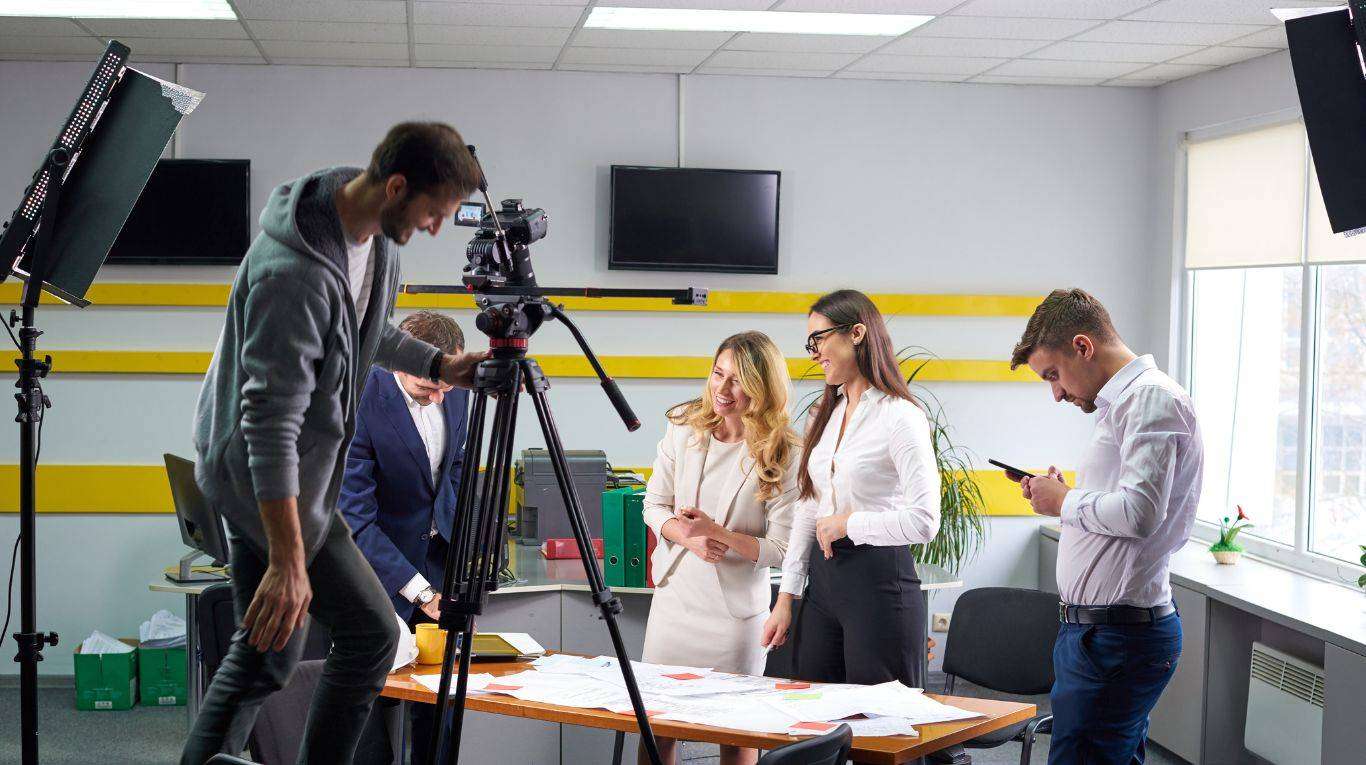
Why a professional video production firm makes the difference:
Expertise: Experienced producers connect learning objectives to story structure and pacing, so content flows logically and teaches the “why” behind each step.
High-quality equipment & crew: Pro lighting, lenses, audio, and multi-camera setups improve clarity and trust—91% of consumers say video quality affects brand trust.
Creative direction: Directors and editors use visuals, timing, and sound design to reduce cognitive load and focus attention on what matters—especially critical for regulated fields like healthcare and compliance.
FAQs: 7 Secrets to High-Impact Educational Video Production:
1) What is microlearning and why does it work for workplace training?
Microlearning is a training approach that delivers instruction in short, focused bursts—typically 2 to 5 minutes per lesson—each targeting a single learning objective. Rather than sitting through a 45-minute course, learners engage with a quick video, scenario, or interactive module that answers one specific question: how to handle a difficult customer call, how to correctly complete a safety checklist, or what changed in the latest compliance update. It works because it fits the way people actually learn at work—in small windows between tasks, on a phone between meetings, or right before they need to apply a skill. Research consistently shows microlearning improves knowledge retention and completion rates compared to longer formats, and LinkedIn’s Workplace Learning data confirms it’s become a core format for L&D teams. For video specifically, microlearning works best when each clip is scripted around one measurable outcome, uses real-world context rather than generic scenarios, and is designed to slot into a modular library that can be updated without reshooting the entire course.
2) Can you recommend some top companies for training video production?
Some top training video production companies include Colossyan (AI-based video creation), Epipheo (explainer and corporate training videos), and Vidico, all known for creating engaging, high-quality learning content. Companies like NextThought and Ninja Tropic also specialize in interactive and microlearning training videos for businesses. Elephant Productions also stands out as a top choice, delivering professional, story-driven training videos tailored to business goals.
3) How can educational videos enhance employee training programs?
Educational video production enhances employee training by making learning more engaging, consistent, and easy to retain through visual storytelling and real-world examples. It also allows teams to scale training efficiently while reducing time and costs.
4) How do we scale a library efficiently?
Plan modular scripts in pre-production so one shoot yields master lessons plus micro-clips for LMS and refreshers. This keeps your training video production durable and adaptable.
Final Thoughts:
If you want videos people actually finish, teach with purpose. Define outcomes, film real workflows, use graphics to visualize hard concepts, and keep lessons bite-sized. Pair this craft with rigorous pre-production and thoughtful distribution, and your learning content will pull its weight in the classroom, the clinic, and on the job.